 Snagline
Paint defects: what they look like, what causes them and how to snag them
The most common paint defects on new and refurbished walls and woodwork are flashing (patchy sheen), roller marks and orange peel, runs and sags, poor cutting-in, cissing, crazing and cracking, pinholes, blistering, efflorescence and grinning (the old colour showing through). Most come from surface preparation, the wrong product or method, or not enough coats, and most are fixed by preparing the area and repainting the whole surface, not patching.

How to inspect paintwork
Most decorating defects are only visible in the right light. Inspect in daylight with the lights off, then with a torch held flat against the wall (raking light) so that ridges, runs and patches show up. Look from normal viewing positions first: a defect you can only see with your nose on the wall and a torch may be within tolerance. Many snagging surveyors and housebuilder standards judge finishes from a normal viewing distance, often around two metres, in ordinary daylight; check the standard or warranty that applies to your job.
Check walls, ceilings, woodwork (skirting, architraves, doors and frames), cutting-in lines, and areas behind and around fittings: radiators, sockets and switches are where corners get cut.
Paint defects on walls and ceilings
| Defect | What you see | Usual cause | Usual fix |
|---|---|---|---|
| Flashing | Shiny or dull patches in the sheen, often where filler was used or touch-ups were done | Porous filler or plaster not primed; touch-ups with a different batch, tool or sheen | Spot-prime repairs, then repaint the whole wall corner to corner |
| Picture framing | A band around the edges and corners that looks different from the middle | Cutting in by brush and rolling the rest at different times or thicknesses | Cut in and roll one wall at a time, keeping a wet edge; repaint |
| Roller marks and orange peel | Ridges or a dimpled, orange-skin texture | Wrong roller nap, too much or too little paint, overworking | Light sand, then a further coat with the right roller |
| Runs and sags | Drips or curtains of paint, often on doors and below edges | Paint applied too thick or thinned too much | Let dry, cut back or sand flat, repaint |
| Grinning (poor opacity) | Previous colour, filler or plasterboard joints show through | Too few coats or a big colour change without a primer or undercoat | Further coats until the colour is even |
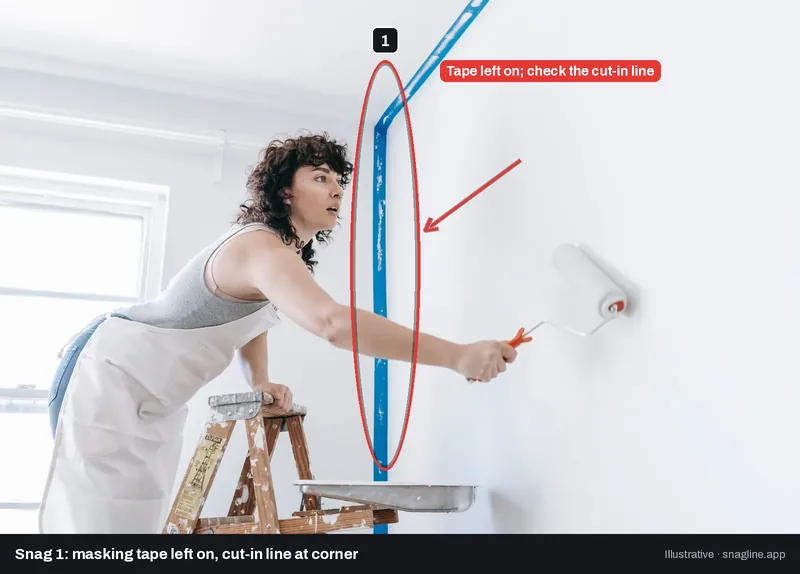
| Poor cutting-in | Wavy lines where wall meets ceiling or woodwork; paint on sockets, switches, glass | Rushed work, no masking | Re-cut the line; clean paint off fittings |
| Crazing and mud cracking | A network of fine cracks in the paint | Paint applied too thickly, over a glossy surface, or drying too fast | Scrape or sand back to sound paint, prime, repaint |
| Efflorescence | White, powdery salts coming through on new plaster or masonry | Moisture carrying salts out of the substrate | Let it dry out, brush off salts (not wash), find the moisture source, then decorate |
| Cracks at joints and corners | Fine cracks along ceiling lines, board joints or around frames | Shrinkage and movement as a new building dries | Rake out, fill or use decorator's caulk, repaint; common at end-of-defects inspections |
| Bits and contamination | Grit, hairs or dust set into the finish | Dirty surface, tools or paint; sanding nearby | Denib, clean, recoat |
Paint defects on woodwork and gloss
| Defect | What you see | Usual cause | Usual fix |
|---|---|---|---|
| Cissing | Paint pulls back from the surface, leaving bare spots or craters | Grease, silicone, wax or polish on the surface | Degrease thoroughly, key with abrasive, repaint |
| Pinholes and cratering | Tiny holes or craters in the film | Air in porous surfaces or filler, over-thick coats, shaking rather than stirring the paint | Sand, fill if needed, prime, apply thinner coats |
| Brush marks | Visible lines in gloss or eggshell | Paint dragged as it dries, wrong brush, cold conditions | Sand flat, recoat working to a wet edge |
| Blistering | Bubbles in the paint film | Moisture or resin in the wood, painting in sun or over damp | Scrape, let the timber dry, prime knots, repaint |
| Yellowing | White gloss turning cream, often in dark areas | Ageing of solvent-borne gloss | Repaint; water-based paints yellow less |
| Knots bleeding | Brown stains showing through over knots | Knots not sealed with knotting solution | Seal knots, prime, repaint |
| Sticking doors and windows | Paint seals sashes or doors shut, or they stick to frames | Painted closed or before the paint had dried | Free, sand edges, repaint thinly |
Car-paint terms such as fish eyes, solvent pop and orange peel describe similar effects in automotive refinishing, but the causes and fixes there are specific to spray systems.
How to write a paint snag the decorator can act on
"Paint poor in lounge" starts an argument. A good entry gives the room, the surface, the exact spot, what is wrong and what fixed looks like, with a photo marked up with an arrow or box:
- Lounge, chimney breast, left side: flashing over filled area, about 300 mm across. Repaint whole wall.
- Bedroom 2, ceiling line above window: wavy cutting-in, magnolia on white ceiling. Re-cut line.
- Landing, door to bathroom: runs on lower panel, hinge side. Rub down and recoat.
- Kitchen, wall behind door: grinning, plasterboard joints visible. Further coat.
Number each one, keep the numbers through the job and mark each as fixed only once you've checked it. Our snag list guide covers the format, and the new build snagging checklist lists decorating checks room by room.
Which paint defects are acceptable?
Not every mark is a defect. Housebuilders' and warranty standards generally judge decorating finishes at a normal viewing distance in daylight, and minor imperfections that are only visible in raking light or very close up may be treated as acceptable. Shrinkage cracks in a new home are expected as it dries out; whether the builder fills them, and when, depends on the warranty and the developer's policy. For a new home, check your developer's customer charter and warranty documents; for a contract job, check the specification. If in doubt, list it and let it be discussed: it is easier to remove an item than to add one later.
Snagline lets you photograph each defect, mark it up with an arrow, box and label, and give it a trade, priority and due date, then send the decorator a PDF list from the room you're standing in.
Questions
What is flashing in paint?
Patches of different sheen on a painted wall, usually where filler or bare plaster absorbed the paint differently, or where touch-ups were done. The usual fix is to spot-prime and repaint the whole wall.
What causes orange peel on painted walls?
Usually the wrong roller nap, applying too much or too little paint, or overworking the paint as it dries. Light sanding and another coat with the right roller fixes it.
What is cissing in paint?
Paint pulling back from the surface and leaving bare spots or craters, usually because of grease, silicone, wax or polish. The surface needs degreasing and keying before repainting.
Why does new paint crack?
Fine crazing usually means the paint went on too thickly or over a glossy surface. Cracks at joints and corners in new buildings are often shrinkage and movement as the structure dries out.
Should touch-ups be done or the whole wall repainted?
Touch-ups often flash, especially with sheen finishes, so decorators usually repaint the whole wall corner to corner for an even finish.